
Rachel Bigsby Launches Official Petition To End Guga Hunt
From a personal appeal to protect Scotland's Gannets to more than 122,000 signatures and counting, new scientific and animal-welfare scrutiny, and NatureScot's refusal of the 2026 licence, Rachel Bigsby's campaign to end the annual slaughter of up to 2000 Northern Gannet chicks in Scotland has brought the future of the centuries-old Guga Hunt before the Scottish Parliament.
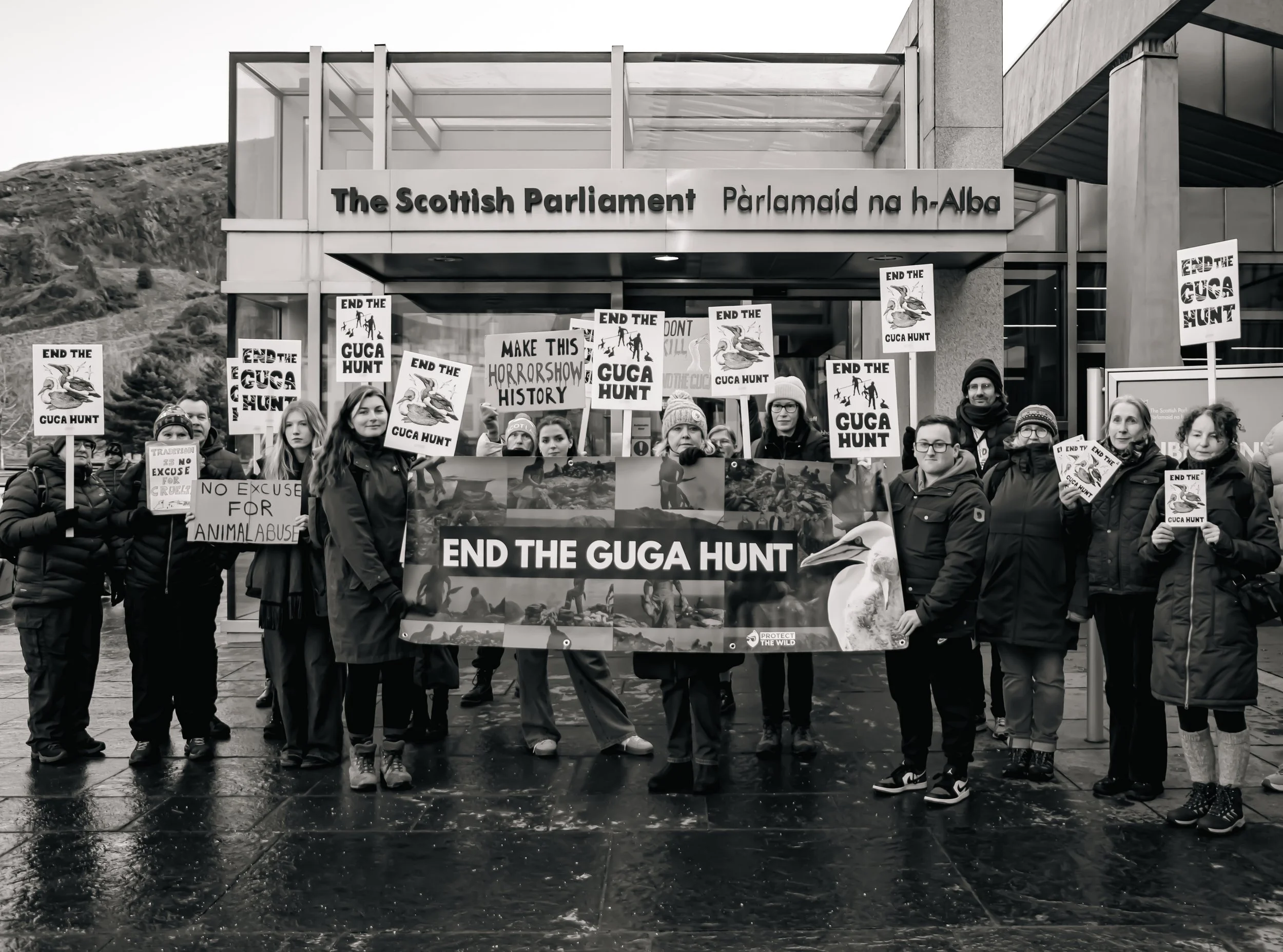
Rachel Bigsby stands outside of The Scottish Parliament with others wishing to see an end to the Guga Hunt.
One Photographer, One Petition, One Purpose
On 4 November 2025, award-winning wildlife photographer and seabird conservation advocate Rachel Bigsby announced the launch of PE2202: Stop the Guga Hunt, a petition calling upon the Scottish Parliament to amend Section 16 of the Wildlife and Countryside Act 1981 and permanently remove the power to license the taking of Northern Gannet chicks on Sula Sgeir, Scotland.
The petition was born from more than a decade spent documenting the extraordinary lives of seabirds, particularly Northern Gannets, and witnessing the increasingly precarious circumstances in which they survive.
For Rachel, whose work with Gannets has been recognised by Wildlife Photographer of the Year and Bird Photographer of the Year, the motivation was profoundly personal. Her years observing Gannets had revealed birds of remarkable social complexity, enduring pair bonds and extraordinary parental devotion. Her subsequent documentation of the devastation caused by Highly Pathogenic Avian Influenza (HPAI) brought the vulnerability of these colonies into even sharper focus.
Against a backdrop of disease, climate change, diminishing prey availability, fisheries interactions and mounting human pressures, Rachel questioned why Scotland continued to authorise the deliberate killing of young Gannets at one of its internationally important breeding sites.
Her petition sought not merely to challenge an annual licensing decision, but to address the legislation that made the hunt possible. When asked about the petition, Rachel said:
“What first began as a personal appeal to protect my favourite birds soon developed into an international conservation campaign, prompting fresh examination of the science, welfare considerations and regulatory framework surrounding a practice that had endured for centuries”

What Is the Guga Hunt?
The Guga Hunt is a tradition associated with the community of Ness on the Isle of Lewis in Scotland's Outer Hebrides. For generations, a group of men has travelled to Sula Sgeir, an uninhabited rocky island approximately 40 miles north of Lewis, to kill young Northern Gannets, locally known as guga, for human consumption.
Historically, seabirds provided an important food source for communities living in remote and often unforgiving environments. The practice consequently became entwined with local identity, inherited knowledge and island heritage.
The modern hunt, however, has become increasingly contentious.
Young Gannets are taken from their nest within the breeding colony by hook and pole before they are capable of flight and killed, traditionally by blows to the head.
The activity is only made possible by a legal loophole within Section 16 of the Wildlife and Countryside Act 1981. While wild all Gannets are protected against intentional killing or taking, this loophole permits NatureScot to authorise the taking of up to 2000 Gannets on Sula Sgeir for human consumption.
Sula Sgeir also forms part of the North Rona and Sula Sgeir Special Protection Area, designated for its internationally important seabird populations.
It is this apparent contradiction between the conservation obligations attached to a protected breeding colony and the continued existence of a specific licensing exemption that lies at the heart of PE2202.
The Devastating Legacy of Avian Influenza
The urgency behind Rachel's petition was inseparable from the catastrophic impact of avian influenza on Scotland's seabirds.
The H5N1 outbreak caused extensive mortality across Northern Gannet colonies during 2022, including some of the most significant breeding populations in the North Atlantic. NatureScot has since confirmed that Scotland's Gannet population declined by approximately 22%, while the estimated decline at Sula Sgeir was between 23% and 41%.
As Rachel explains below, the consequences extend far beyond the immediate mortality:
“Gannets typically take around five years to reach breeding age, meaning the full demographic consequences of the outbreak, including the loss of younger birds that would otherwise have entered the breeding population, cannot yet be fully understood”.
NatureScot has since acknowledged that the effects of chick mortality during the 2022 outbreak will only begin to become apparent in the breeding population from 2027.
For a species that invests considerable time and energy in raising a single chick each breeding season, the loss of breeding adults and future recruits presents a serious challenge to recovery.
Rachel's central argument was that any additional human-caused mortality should be considered within this wider ecological context, rather than assessed in isolation.
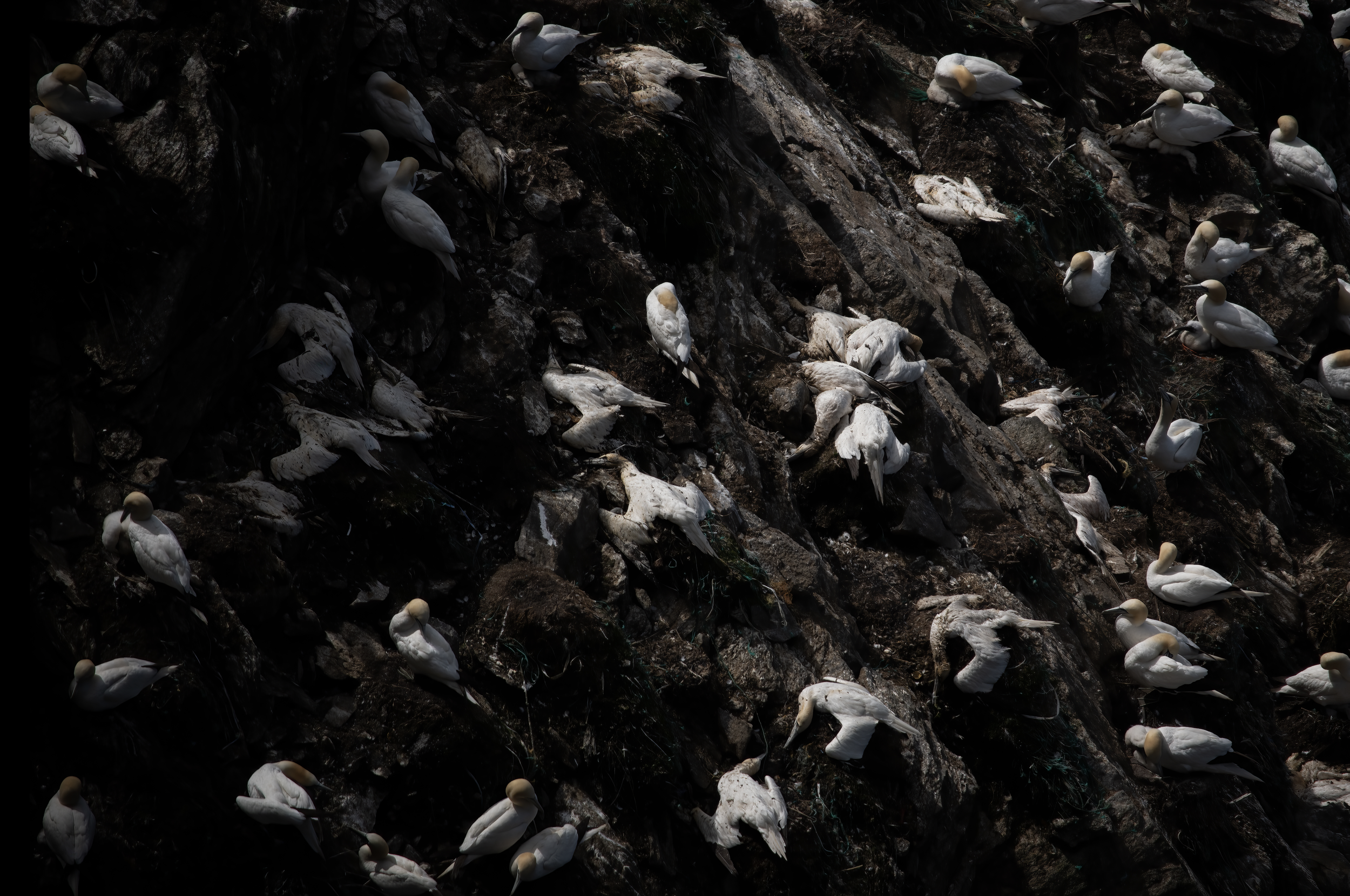
Northern Gannets dying in their hundreds at Hermaness National Nature Reserve, Shetland.
A Petition That Brought
International Attention
Following its publication, PE2202 attracted rapidly growing public support, becoming the most-signed petition on the Scottish Parliament's online petitions platform in the past decade, and third most in the history of the online petition platform.
By October 2026, it had received more than 122,000 signatures.
The campaign also attracted extensive international media attention, bringing the Guga Hunt to audiences far beyond Scotland and generating an estimated reach of more than two million people.
Behind the public campaign, Rachel undertook sustained engagement with parliamentarians, government agencies, scientists, conservation organisations, animal-welfare specialists and journalists.
She submitted evidence, pursued Freedom of Information disclosures, challenged the adequacy of existing regulatory safeguards and sought to ensure that decisions concerning the hunt reflected the latest conservation science.
Her petition also encouraged wider contributions from individuals and organisations, including independent animal-welfare charities and scientific specialists.
Although NatureScot has been explicit that its licensing decision was determined by the applicable legislation and scientific evidence, not public campaigning, the period following the petition's launch saw an important expansion of the evidence and scrutiny surrounding the hunt.
The significance of PE2202 therefore extends beyond its signature count. It helped bring a previously specialised licensing issue into sustained public and parliamentary consideration.
New Scientific Evidence Changes the Conservation Assessment
One of the most consequential developments as a result of Rachel Bigsby’s petition was NatureScot's reassessment of the potential effects of the hunt on the Sula Sgeir Gannet population. The first population viability analysis in a decade.
In 2025, NatureScot had concluded that the previously requested quota of 2,000 birds was no longer sustainable following avian influenza, but authorised a reduced take of 500 chicks using the evidence and modelling available at that time. That assessment had important limitations.
The modelling approach prior to PE2202 could not adequately incorporate exceptional mortality events such as HPAI alongside other human-related pressures, including fisheries bycatch and offshore wind development.
NatureScot subsequently commissioned an updated population model, completed in 2026, capable of examining these pressures cumulatively. The findings, as a result of the public pressure supporting Rachel’s petition, fundamentally altered the licensing assessment.
The new model identified avian influenza as the largest individual influence on the colony's predicted long-term recovery among the impacts examined. When the combined pressures of disease, offshore wind, bycatch and the hunt were considered, NatureScot could no longer exclude the possibility of an adverse effect on the protected Gannet population. Crucially, this concern applied not only to the requested quota of 2,000 chicks, but also to a substantially reduced quota of 500.
The updated assessment demonstrated why conservation decisions must account for cumulative environmental pressures and uncertainty, particularly when dealing with populations recovering from exceptional mortality events.
Animal Welfare Under Independent Scrutiny
Rachel’s petition also generated a renewed examination of the welfare implications of the Guga Hunt.
In June 2026, the Scottish Animal Welfare Commission provided advice to the Scottish Government concerning the methods used to capture and kill young Gannets. The Commission examined the welfare implications of removing wild birds from their breeding environment, capturing them using poles and nooses, and dispatching them through blunt-force trauma. Its findings raised serious concerns about the ability to achieve a consistently humane death under the practical conditions prevailing on Sula Sgeir.
The Scottish Animal Welfare Commission stated that it was unaware of a feasible humane method of dispatch under those conditions.
The assessment also considered welfare impacts extending beyond the chicks taken for consumption, including fear and stress among other birds, disruption to parental behaviour and the potential consequences of disturbance within an occupied breeding colony. These findings added an important independent dimension to the debate.
For Rachel, they reinforced the argument that the legality of an established practice does not, in itself, establish its compatibility with contemporary animal-welfare expectations.

Lethal Impacts to Non-Target Species
From the petition, further concerns emerged regarding the consequences of hunting activity for other seabirds breeding on Sula Sgeir.
Information obtained through Freedom of Information requests and NatureScot's assessments highlighted the sensitivity of species including amber-listed Northern Fulmars, amber-listed European Storm-petrels and red-listed Leach's Storm-petrels.
These birds share the island with breeding Gannets, occupying vulnerable nesting sites and burrows.
NatureScot's assessments recognised that human activity and equipment will disturb these red and amber listed breeding seabirds by obstructing access to their nest sites, interrupting chick provisioning and contribute to nest abandonment and subsequent chick mortality through starvation.
Significantly, disturbance was anticipated even where mitigation measures were applied.
This evidence widened the conservation discussion beyond the number of Gannet chicks directly harvested.
It raised questions about the cumulative ecological consequences of introducing people and equipment into a sensitive, internationally important seabird breeding environment.
Questions of Monitoring, Compliance and Accountability
Alongside the scientific and welfare concerns, PE2202 examined the practical enforcement of licence conditions.
Freedom of Information disclosures raised questions about compliance monitoring, the absence of independent observers during the hunt and the extent to which regulators could verify adherence to conditions intended to protect birds from unnecessary suffering and disturbance.
Those concerns became particularly prominent in July 2026, when Rachel received video footage originating from a subsequently deleted online recording uploaded to YouTube by the hunting party.
The footage (above) shows three men participating in a sack race through an occupied Gannet colony, using the same sacks employed to transport soon to be killed young birds. At least one additional individual was involved by filming.
Young, flightless Gannets could be seen moving away as the men approached.
Rachel submitted the footage to NatureScot on 24 July and requested that it be considered before the 2026 licensing decision. She also sought to have it entered into the parliamentary evidence record.
The video evidence raised serious questions about avoidable disturbance and the effectiveness of a licensing regime in which compliance cannot be continuously and independently observed.
Whether the recorded conduct constituted a specific licence breach is a matter for the relevant authorities to determine. Nevertheless, its emergence illustrated the importance of transparency, independent verification and accountability within protected wildlife sites.
Culture, Conservation and the Possibility of Change
Throughout the campaign, Rachel has maintained that opposition to the killing of Gannets need not amount to hostility towards the people or cultural heritage of Ness.
She acknowledged the historical reliance of remote island communities upon seabirds and the significance of inherited traditions in sustaining community identity. Her position is that cultural heritage could be preserved without requiring the continuation of lethal practices. Among the alternatives she proposed was a professionally produced documentary exploring the history of the Guga Hunt, allowing the Men of Ness to explain their relationship with Sula Sgeir in their own words while scientists and conservationists examined the changing circumstances facing the island's wildlife. Rachel discussed the non-lethal approaches to preserving the tradition during her engagement with NatureScot.
The subsequent emergence of the colony footage profoundly challenged her confidence in the conduct of those shown, but did not diminish the underlying principle that island heritage deserves to be understood rather than collectively vilified. The question, she argued, was not whether history should be remembered, but whether its continuation must depend upon the killing of protected seabirds.
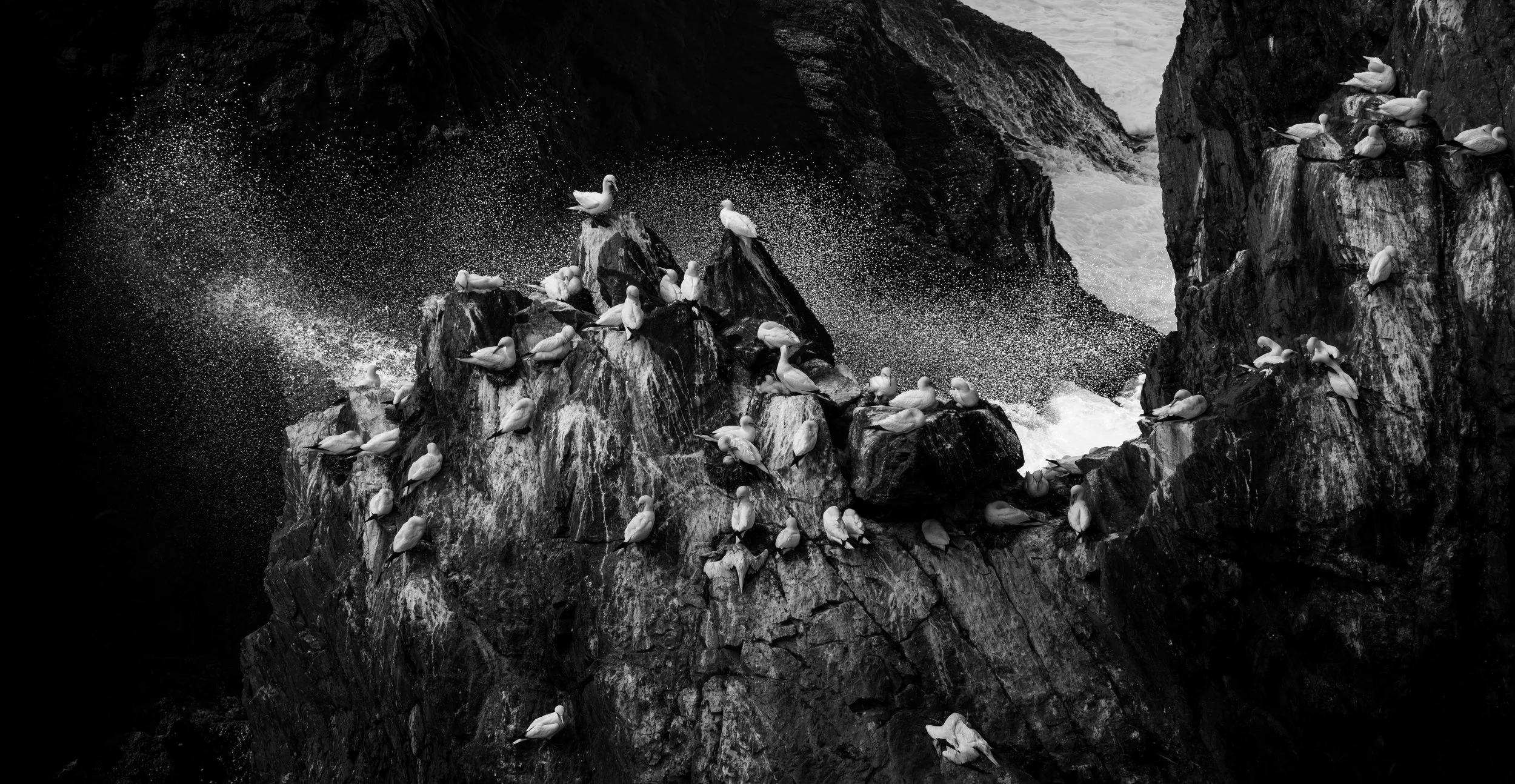
Scotland's Seabird Crisis Reinforces the Need for Protection
On August 13th, just ten days after the Nature Scot’s Guga Hunt licensing refusal, NatureScot published further evidence illustrating the precarious condition of Scotland's seabirds.
Its Scottish Biodiversity Indicator found that average seabird abundance had fallen to approximately half its level in the 1980s. Almost all assessed species showed long-term declines, reflecting the combined effects of environmental change, food shortages, disease and other pressures.
NatureScot identified safeguarding food supplies, restoring habitats and maximising seabird survival as central priorities for conservation. Although this national indicator encompasses a range of seabird species and should not be interpreted as a direct measure of Sula Sgeir's Gannets, its findings reinforce the broader ecological context in which the future of the Guga hunt must be considered.

August 2026: NatureScot Refuses the Guga Hunt Licence
On 3 August 2026, Rachel Bigsby’s campaign and petition reached its first major conservation milestone, as NatureScot's Board formally refused the application for a 2026 Guga Hunt licence.
The decision followed consideration of the updated population model, the most recent scientific evidence and the legal obligations governing activities affecting the North Rona and Sula Sgeir Special Protection Area. NatureScot concluded that an adverse effect on the Gannet population could not be excluded, whether the proposed take was 2,000 chicks or a reduced quota of 500. Accordingly, the application was refused.
For Rachel, the decision represented a landmark development after months of campaigning, scientific scrutiny and public engagement. It also demonstrated the importance of revisiting long-established licensing practices when new evidence reveals previously unaccounted-for ecological risks.
The refusal was a scientific and regulatory decision made by NatureScot. The petition's achievement lay in helping elevate the issue, sustain scrutiny and encourage the wider examination of conservation and welfare concerns.
For the Gannets of Sula Sgeir, the immediate consequence was clear: the proposed licensed harvest would not take place in 2026.
September 2026: The Scottish Parliament Keeps PE2202 Open
NatureScot's refusal did not bring the parliamentary campaign to an end.
On 10 September 2026, the Scottish Parliament's Public Petitions Committee reconsidered PE2202, taking account of the new licensing decision, submissions from Rachel Bigsby and other interested parties, and representations concerning the cultural importance of the hunt to the Ness community.
Committee members agreed that the petition should remain open.
They also agreed to seek further evidence from NatureScot, Rachel as the petitioner and representatives of the local community before reaching a longer-term conclusion. The decision acknowledged both the substantial public interest surrounding the petition and the importance of hearing the perspectives of those directly affected.
October 2026: The Campaign Is Not Over
NatureScot's decision applies to the 2026 licence application only. It does not permanently prohibit the Guga Hunt, nor does it prevent future applications from being submitted or approved. The legal loophole within Section 16 of the Wildlife and Countryside Act 1981 remains in force.
NatureScot has explicitly confirmed that ending the hunt permanently would require legislative change, a matter for the Scottish Government and Parliament. This distinction is central to PE2202.
The petition seeks to remove the statutory power to license the taking of Gannets on Sula Sgeir, ensuring that the protection of the colony does not depend upon a succession of annual licensing decisions.
The 2026 refusal therefore represents a major conservation milestone, but not the fulfilment of the petition's ultimate objective.
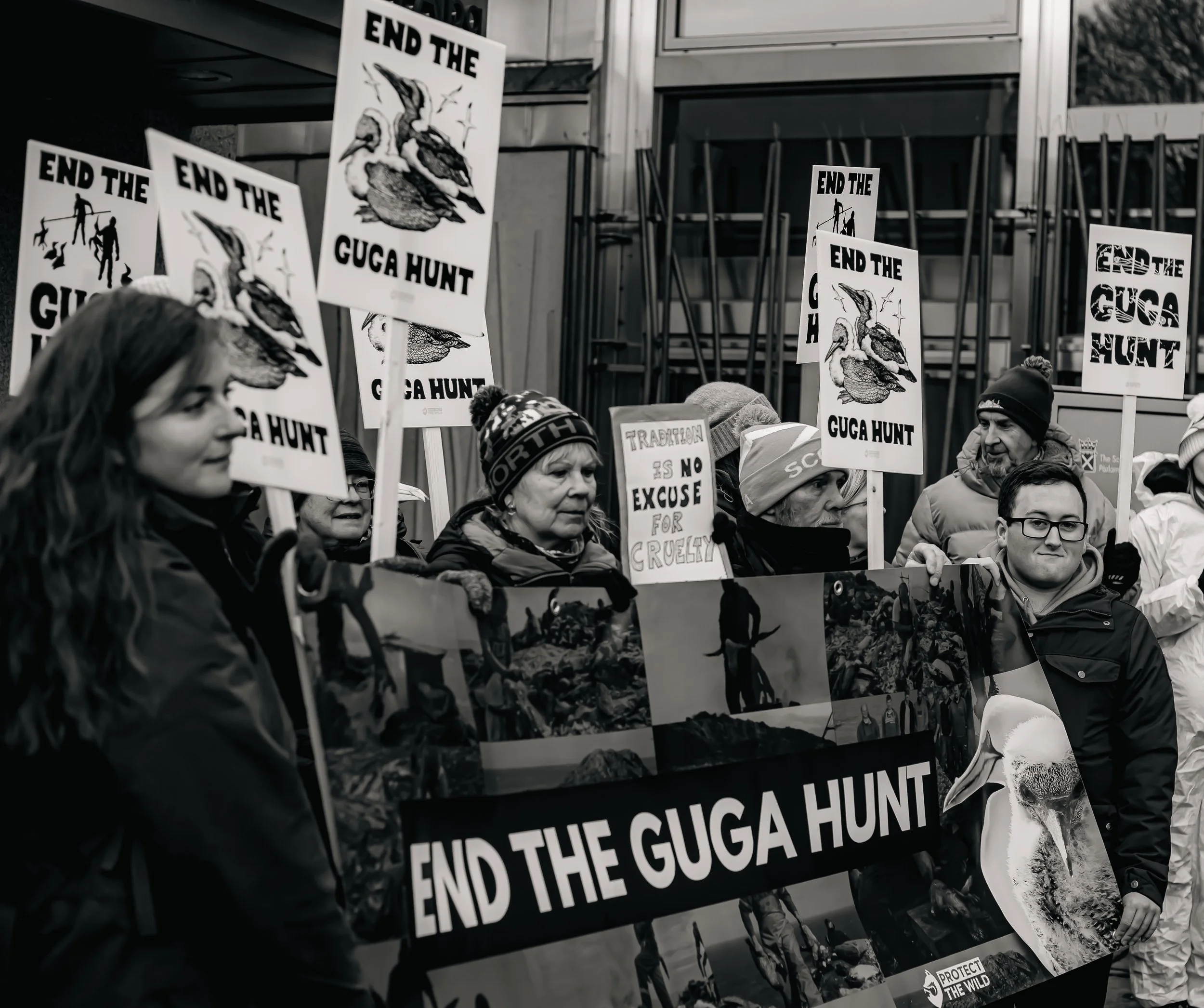
One Voice, A Wider Movement
Reflecting on the campaign, Rachel Bigsby has spoken about the considerable personal commitment required to bring the issue before the public and Parliament.
What began as an independent initiative involved extensive correspondence, research, evidence gathering and engagement with institutions, often before substantial organisational support had emerged.
As the petition gained momentum, it attracted wider participation from scientists, welfare specialists, charities, journalists and members of the public.
The experience also revealed a broader lesson about the relationship between individual advocacy and institutional change. As Rachel reflected:
"Institutions don't always lead change. Sometimes they follow it. Sometimes it takes one person asking an uncomfortable question before everyone else feels able to engage."
The campaign's achievements belong to the many individuals who contributed their expertise, signatures and support.
Its origins, however, remain clear: PE2202 was conceived and launched by Rachel Bigsby, whose personal commitment to the conservation of Gannets helped bring a centuries-old practice into renewed public and parliamentary scrutiny.
What began with one person refusing to remain silent has become a movement supported by more than 122,000 voices.
And while the Gannets of Sula Sgeir were spared the licensed hunt in 2026, the campaign for lasting legal protection continues.
Support PE2202: Stop the Guga Hunt
The Scottish Parliament continues to consider Rachel Bigsby's petition to remove the legal exemption permitting the licensed taking of Gannets on Sula Sgeir.
Members of the public can read the petition, add their signatures and follow its parliamentary progress.
Further Reading and Official Sources
Scottish Parliament — Public Petitions Committee, 10 September 2026
Scottish Animal Welfare Commission — Guga Hunt Welfare Advice
Updated October 2026 to reflect developments in scientific evidence, the 2026 licensing decision and the Scottish Parliament's continued consideration of PE2202.