
A Photographic Collaboration with the Lord Howe Island Tourism Association
British wildlife photographer Rachel Bigsby has collaborated with the Lord Howe Island Tourism Association on a photographic project celebrating the remarkable seabirds and natural heritage of this remote UNESCO World Heritage-listed island in the Tasman Sea.
Situated more than 700 kilometres off Australia's eastern coastline, Lord Howe Island is a place of extraordinary ecological significance, where ancient volcanic landscapes, subtropical forests and the vast surrounding ocean provide sanctuary for internationally important seabird populations.
Invited to spend ten days exploring the island and its surrounding waters, Rachel set out to create a collection of fine-art wildlife photographs that would reveal its seabirds through a distinctive artistic perspective, while celebrating the conservation achievements that have helped safeguard their future.
The collaboration brings together Rachel's intimate understanding of seabirds, her signature approach to natural artistry and the Lord Howe Island Tourism Association's commitment to sharing the island's exceptional natural heritage.
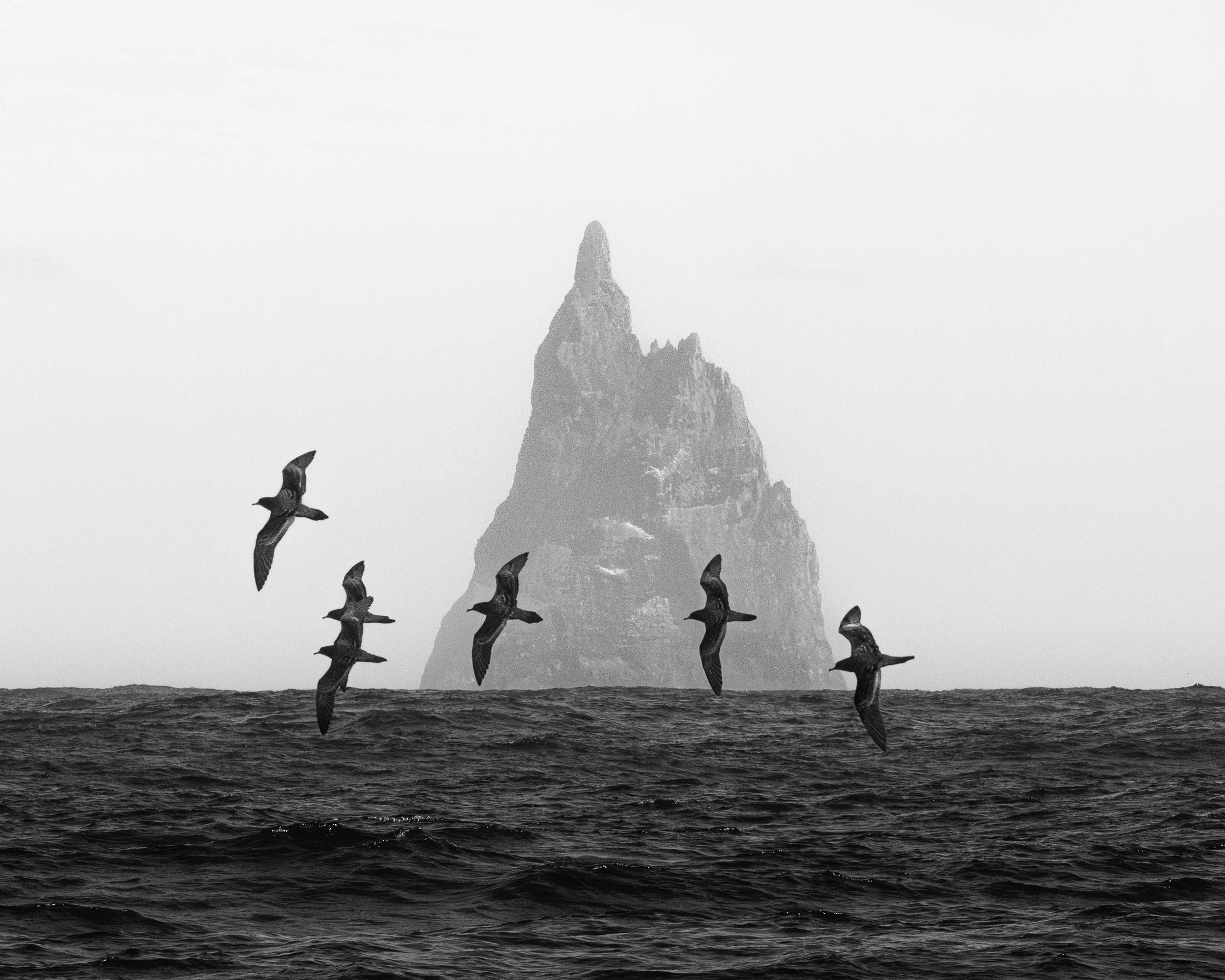
Wedge Tailed Shearwaters pass Balls Pyramid, the world’s tallest sea stack.
Among the most memorable experiences of the collaboration was an offshore excursion to Ball's Pyramid, the world's tallest volcanic sea stack, rising dramatically from the Tasman Sea. Here, the immense scale of the volcanic landscape provided an extraordinary setting for photographing seabirds in flight.
Working from a small boat, Rachel observed Flesh-footed and Wedge-tailed Shearwaters sweeping across the ocean and passing beneath the towering rock formation, their elegant silhouettes appearing momentarily against the immense geological backdrop.
An Artistic Portrait of Lord Howe Island
Throughout the assignment, Rachel immersed herself in the island's extraordinary seabird colonies, photographing Sooty Terns, White Terns, Black Noddies and Flesh-footed Shearwaters in their natural environments.
Rather than concentrating solely on conventional wildlife portraits, she sought to explore the relationship between each species and the landscapes that shape its existence.
From the delicate movements of White Terns among the forest canopy to the extraordinary abundance of Sooty Terns along the coastline, the resulting photographs offer an intimate interpretation of an island where seabirds are woven into almost every aspect of the natural environment.
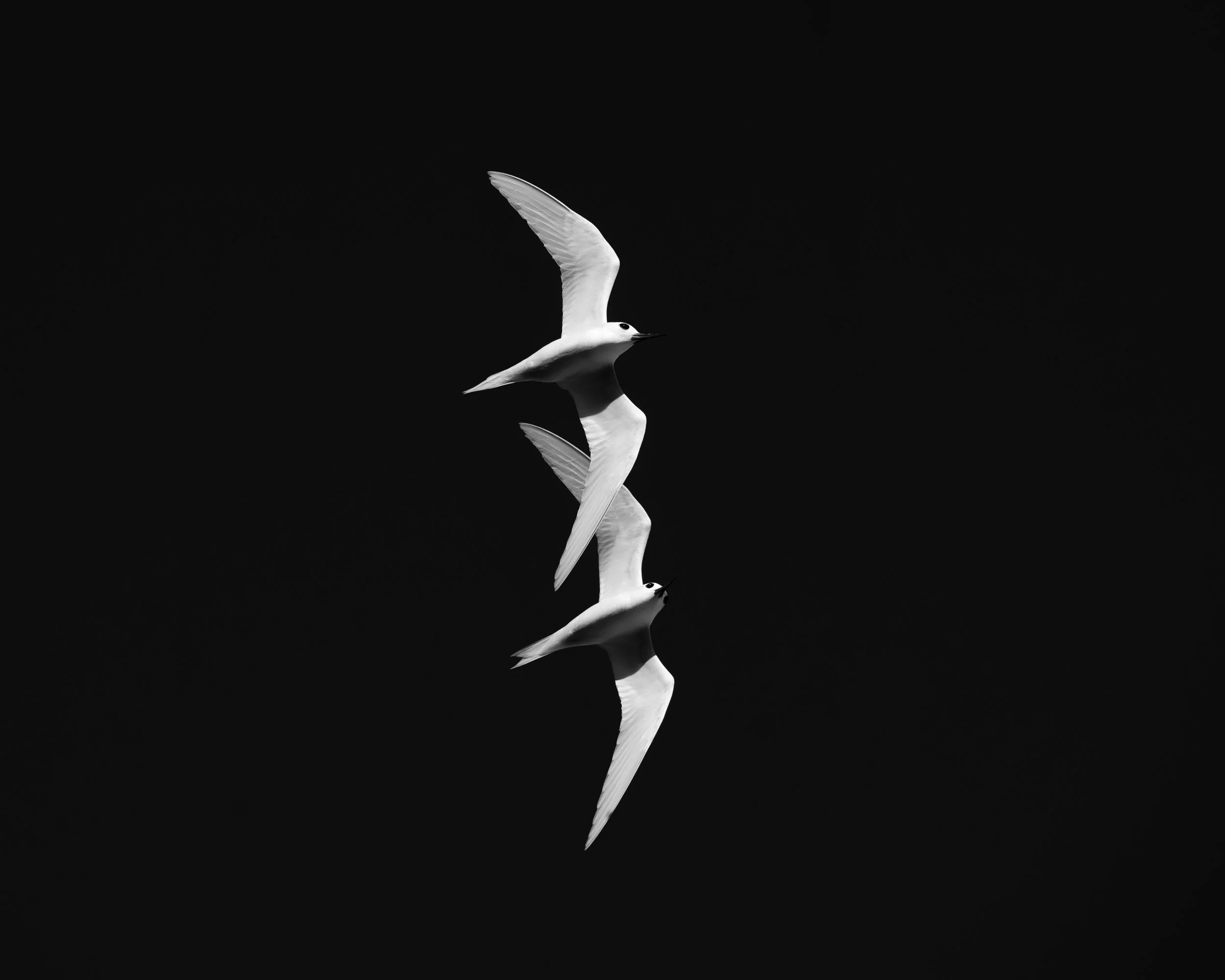
White Terns glide overhead.
Celebrating an Island of Conservation Significance
Beyond its remarkable landscapes and wildlife, Lord Howe Island represents an important story of ecological restoration and long-term environmental stewardship. The removal of invasive predators, including cats and rodents, has contributed to the protection and recovery of native wildlife, while continued biosecurity measures help safeguard the island's fragile ecosystems. During her visit, Rachel spent time learning from those directly involved in the island's conservation, including members of the biosecurity team and ecologist Ian Hutton, whose extensive knowledge of Lord Howe Island's natural history provided valuable context for the photographic assignment. These encounters deepened her understanding of the relationship between conservation and the abundance of wildlife she had travelled to photograph.
The collaboration reflects a shared ambition to communicate Lord Howe Island's natural heritage through photography that is both artistically distinctive and ecologically informed. Through her images, Rachel sought to convey the atmosphere of the island: the movement of seabirds against volcanic cliffs, the quiet intimacy of nesting colonies and the inseparable relationship between ocean, forest and wildlife. Her work invites audiences to experience Lord Howe Island beyond its familiar landscapes, discovering the remarkable lives of the seabirds that make it one of the world's most significant natural environments.
The project also included a short documentary film, offering an additional perspective on the island's wildlife, conservation work and Rachel's experiences in the field.
Supported in part by Nikon Australia, the collaboration represents another chapter in Rachel's ongoing exploration of seabirds across the world's oceans, bringing her artistic practice into partnership with an organisation dedicated to celebrating and protecting an exceptional natural environment.
Explore: Lord Howe Island Tourism Association