
Rachel Bigsby Leads Film With Natural History Museum and RSPB to Highlight Avian Influenza Crisis In Seabirds
Award-winning wildlife photographer and seabird advocate Rachel Bigsby has collaborated with the Natural History Museum, London, and the Royal Society for the Protection of Birds (RSPB) on a powerful short film examining the devastating impact of highly pathogenic avian influenza (HPAI) on Britain's internationally important seabird populations.
The film draws upon Rachel's firsthand experience documenting the catastrophic 2022 outbreak, when avian influenza swept through some of Britain's most significant seabird colonies, causing widespread mortality among Northern Gannets, Great Skuas and other vulnerable species.
The collaboration marks a continuation of Rachel's longstanding commitment to documenting and protecting Northern Gannets, a species that has remained at the centre of her photographic practice, conservation work and personal life for more than a decade.
From National Geographic to the Natural History Museum
In 2022, Rachel documented the devastating consequences of avian influenza at seabird colonies in Scotland, including Bass Rock and Hermaness National Nature Reserve. Her photographs revealed the harrowing reality of the outbreak, recording dead and dying Gannets, abandoned nesting territories and the profound transformation of once-thriving colonies.
Her imagery was subsequently published by National Geographic, contributing to international coverage of a wildlife crisis unfolding largely beyond public view. Two years later, her collaboration with the Natural History Museum and RSPB provided an opportunity to revisit the outbreak, communicate its lasting consequences and bring the plight of Britain's seabirds to an even wider audience.
The resulting film combines Rachel's personal testimony and documentary experience with the conservation expertise of the participating organisations, highlighting both the immediate devastation and the longer-term challenges facing affected populations. For Rachel, who has spent countless hours observing the behaviour, relationships and remarkable lives of Northern Gannets, witnessing their suffering was among the most difficult experiences of her career.
Reflecting on the outbreak, she described the distress of seeing once-powerful seabirds reduced to a fraction of their former selves:
“They were Gannets on the outside, but no longer Gannets on the inside, a shell of what they once were.”
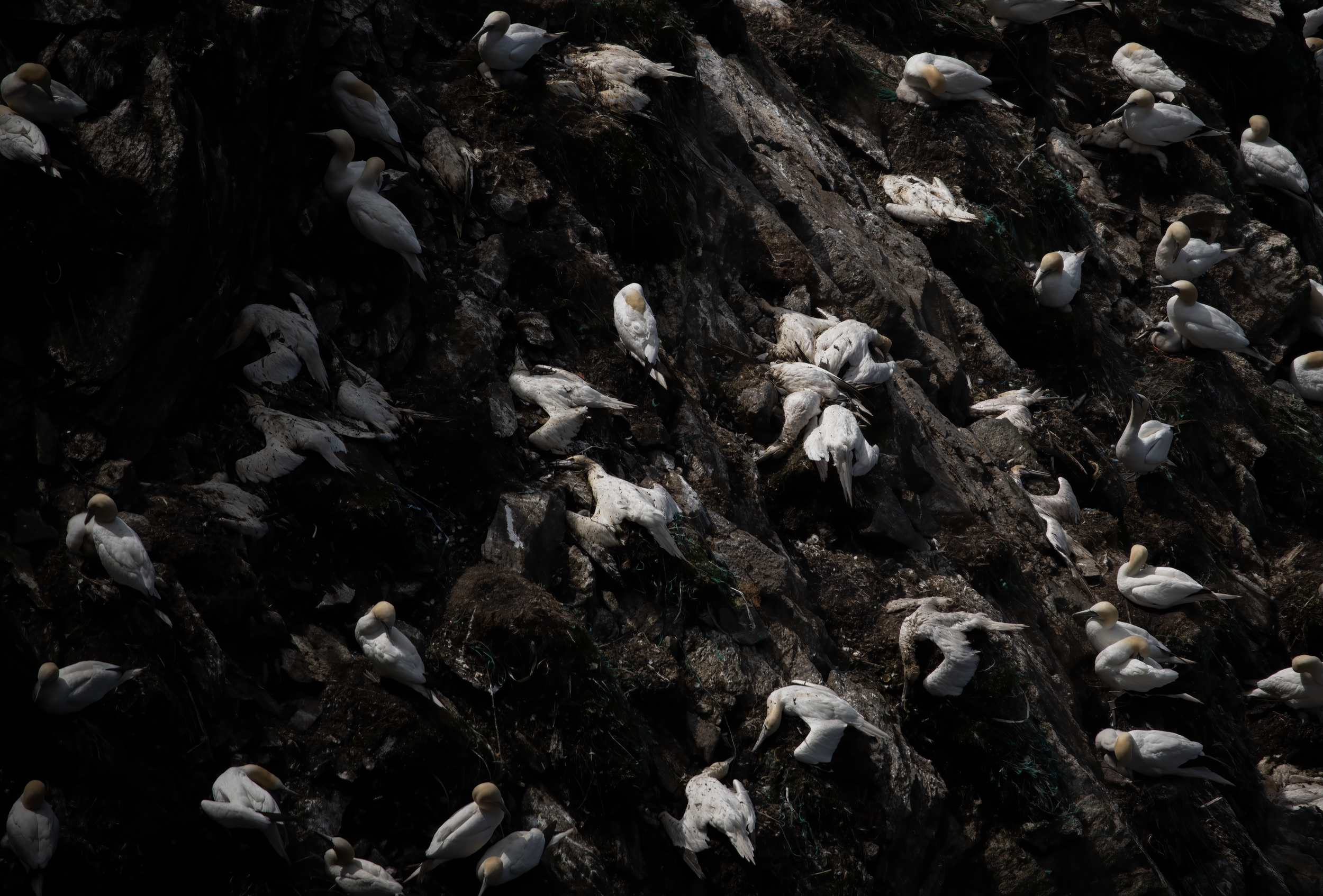
Northern Gannets dead and dying from the disease in Shetland, 2022.
A Crisis Beyond the Photograph
The scale of the outbreak has raised serious concerns for the future of Britain's seabirds, many of which were already experiencing significant environmental pressures.
The RSPB's 2023 HPAI Seabird Survey Project, undertaken in collaboration with conservation organisations and statutory bodies, documented substantial reductions in breeding numbers across several affected species.
Among the findings were a 25% decline in Northern Gannet breeding numbers at surveyed colonies and a 76% decline in Great Skua breeding numbers across surveyed Scottish sites. These figures demonstrated the scale of the losses and reinforced the importance of continued scientific monitoring and conservation action.
For long-lived seabirds that reproduce slowly, population recovery can take many years, particularly when disease compounds existing threats from climate change, fisheries bycatch and declining food availability.
Rachel's involvement in the film reflects her belief that wildlife photography must extend beyond celebrating the beauty of the natural world to confronting the realities of its vulnerability. Having dedicated much of her career to portraying the elegance and extraordinary behaviour of Northern Gannets, she considers documenting the threats to their survival an equally important responsibility.
A Continuing Commitment to Seabird Conservation
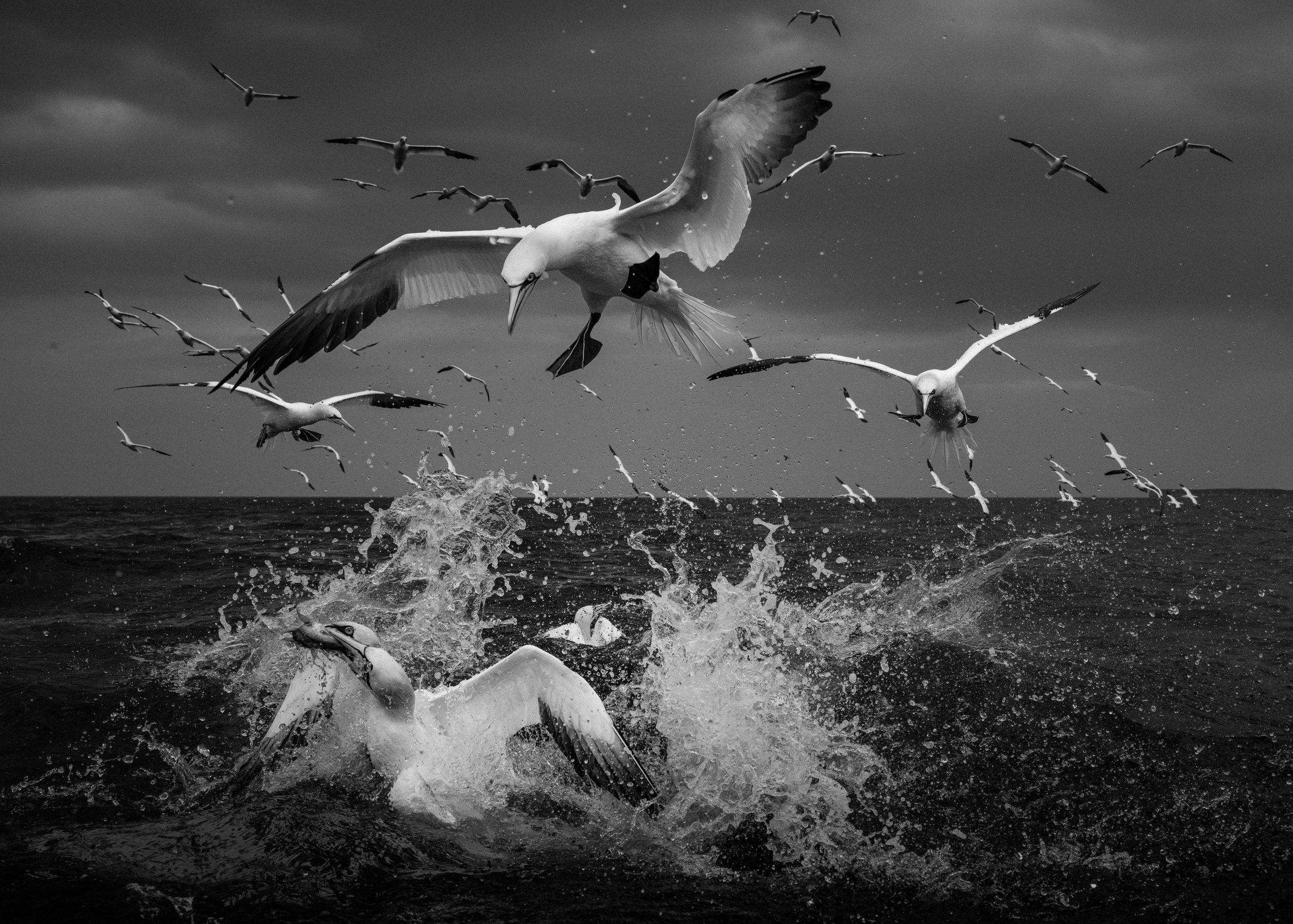
The collaboration carries particular significance following Rachel's recognition at Wildlife Photographer of the Year in 2023, where her fine-art portrait of courting Northern Gannets won the Natural Artistry category. During her acceptance speech, Rachel expressed her hope that the photograph would encourage a global audience to develop a greater connection with the species. The subsequent Natural History Museum film offered another opportunity to continue that ambition, this time through the difficult but necessary documentation of their suffering.
Beyond her photographic practice, Rachel remains actively involved in seabird conservation through voluntary fieldwork, public advocacy and the documentation of environmental threats affecting Britain's marine wildlife. Her continuing work reflects a deeply held conviction that photographers who benefit from the privilege of working closely with wildlife also carry a responsibility to contribute to its protection.
For Rachel, the greatest purpose of her photography lies not only in revealing the beauty of seabirds, but in ensuring that their stories, their struggles and their future are neither overlooked nor forgotten.
Watch the film: Rachel Bigsby with the Natural History Museum and RSPB
Learn more: RSPB — Avian Influenza Updates