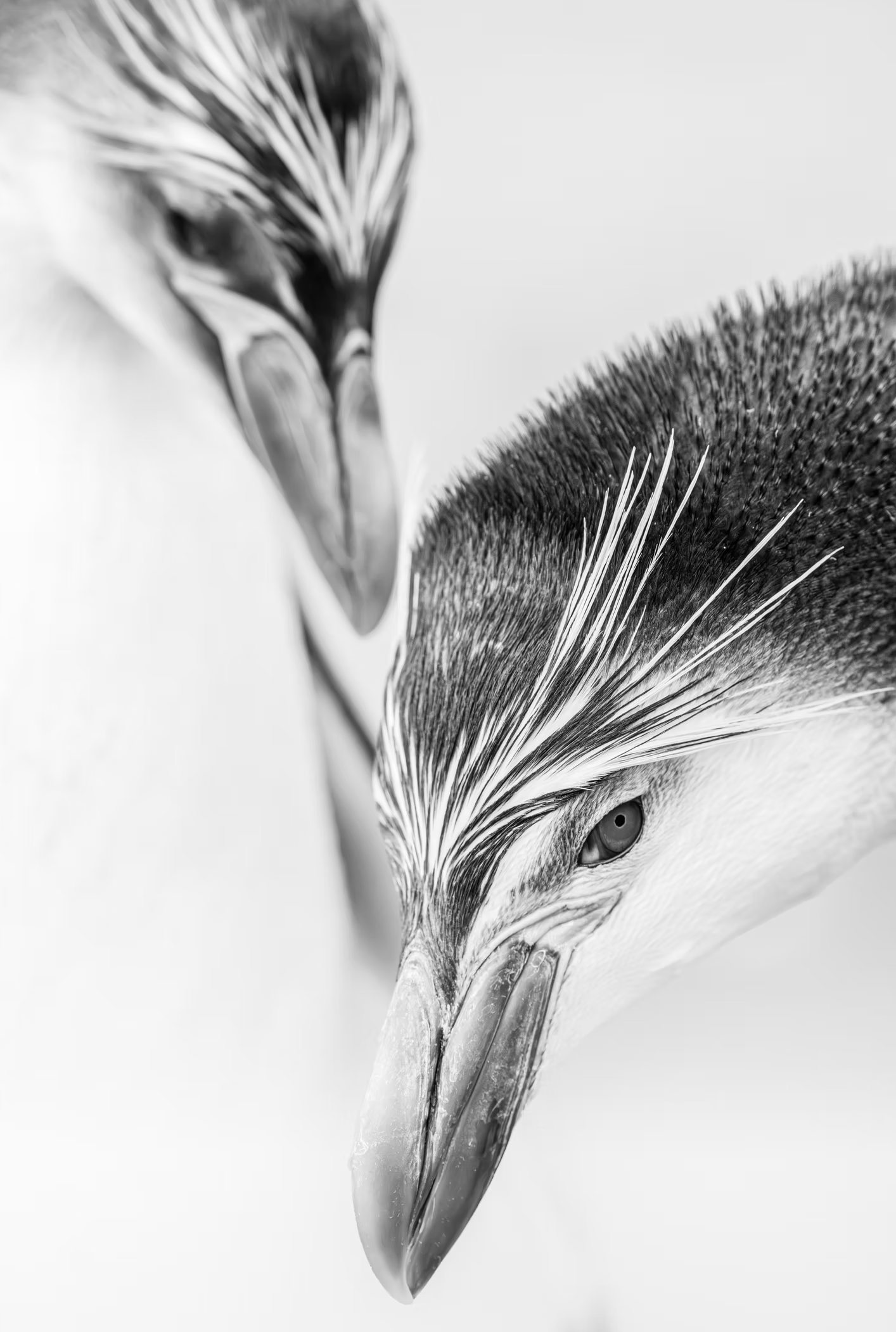
Scattered across the Southern Ocean, the isolated Sub-Antarctic islands of New Zealand and Australia support immense seabird colonies, vast marine mammal gatherings and endemic species found nowhere else. Travelling aboard the Heritage Adventurer with Heritage Expeditions, this small-group photography expedition led by Rachel Bigsby explores The Antipodes, The Bounty Islands, Chatham Island, Macquarie Island, Campbell Island, the Auckland Islands and The Snares; offering extraordinary opportunities to photograph Penguins, Albatross, Seals, Shearwaters, Petrels, Orca and the wildlife of the Southern Ocean in some of the most remote ecosystems anywhere on Earth.
Expedition Highlights
Named ‘The 25 Best Places to Go in 2025' according to Condé Nast Traveler.
Incredibly rare Chatham Island Black Robin and Taiko (Magenta Petrel).
Endemic birds such as the Erect-crested Penguin and the Bounty Island Shag, found only here.
Pyramid Rock, home to the Chatham Island Albatross, an icon of the region.
Wandering Royal Albatross and Salvin’s Albatross soaring over the Chatham's Rise.
Albatross courting ritual, known as "gamming," a rare and mesmerising sight.
Colonies of Royal Penguins and King Penguins at Macquarie Island
Primal battles of Elephant Seals, vying for dominance on the shores of Macquarie Island.
Lusitania Bay, one of the world’s largest penguin breeding colonies, offering unparalleled photographic opportunities.
Extensive opportunities for pelagic seabird photography at sea
Daily Zodiac excursions and shore landings (conditions permitting)
Access to a private Zodiac for increased photographic flexibility
Onboard image reviews, photography sessions and one-to-one tuition
Creative techniques including high key, low key and in-camera multiple exposures

The Subantarctic Islands of New Zealand and Australia
There are few places left on Earth quite like the Subantarctic Islands. Here, vast cliffs tremble with the sound of Seabirds, Penguins gather in numbers almost beyond comprehension and great Albatrosses command the skies above an ocean that seldom rests. Along remote shorelines, Southern Elephant Seals battle for dominance beneath the relentless winds of the Southern Ocean. Isolated by immense distances and shaped by some of the planet's most powerful natural forces, these islands remain among the world's last great wildlife wildernesses.
On this extraordinary voyage, journey to the remote and rugged Sub-Antarctic Snares, Bounty, Antipodes, Auckland, Campbell, Macquarie, and Chatham Islands on an expedition named as 'The 25 Best Places to Go in 2025' according to influential travel bible Condé Nast Traveler.
These islands, scattered across the tempestuous 'Roaring Forties' and 'Furious Fifties,' are among the most isolated and ecologically significant destinations on Earth. With their UNESCO World Heritage designation (excluding the Chatham Islands), they are fiercely protected sanctuaries for some of the world’s rarest wildlife. Here, you’ll encounter the richest diversity of seabirds on the planet, including 10 species of Albatross (five of which breed nowhere else) and over 40 seabird species representing 11% of the world’s total. The islands are also home to endemic species, unique flora, and breathtaking landscapes that have barely changed since they were first charted by explorers in the 18th century.
Yet the islands themselves are only part of the experience. Sea days crossing the Southern Ocean present exceptional opportunities to photograph some of the world's most accomplished ocean wanderers. Wandering, Royal, Campbell, Buller's and Black-browed Albatrosses, alongside Petrels, Prions and Shearwaters, sweep across the waves, sometimes passing within metres of the vessel. Against a constantly changing canvas of sea, sky and weather, these encounters offer an extraordinary setting in which to explore movement, light and the art of photographing birds in flight.
Throughout the journey, Rachel will provide personalised photographic guidance tailored to your experience, interests and creative ambitions. From mastering autofocus and exposure in challenging conditions to anticipating behaviour and developing stronger compositions, tuition takes place where it matters most: in the field, responding to the wildlife and opportunities unfolding around you.
Beyond technical proficiency, Rachel encourages participants to discover their own photographic voice. Drawing upon her distinctive fine-art approach, you will have opportunities to explore high-key and low-key photography, in-camera multiple exposures, intentional camera movement and shutter drag, learning to create images that communicate not simply what a moment looked like, but what it felt like. Her philosophy places particular emphasis on observation, creative decision-making and achieving the desired result in camera, allowing the experience itself to remain at the heart of the photograph.
More than a photography workshop, this is an invitation to immerse yourself in one of the most remote, spectacular and ecologically significant regions of our planet. To experience the extraordinary lives of its wildlife, to embrace the unpredictability of genuine exploration, and to return not only with remarkable photographs, but with a deeper understanding of the subjects, landscapes and stories that inspired them. An expedition to the edge of the world, and an opportunity to see it differently.