
Rachel Bigsby Documents Devastating Seabird Crisis for National Geographic
In the summer of 2022, award-winning wildlife photographer Rachel Bigsby documented the devastating impact of highly pathogenic avian influenza (HPAI) on Scotland's seabird populations, contributing powerful documentary imagery to a major National Geographic feature examining the unfolding ecological crisis.
Best known for her fine-art interpretations of seabirds, Rachel's assignment revealed a very different side of her photographic practice: one rooted in conservation, accountability and an enduring responsibility towards the species she has dedicated her career to understanding and protecting.
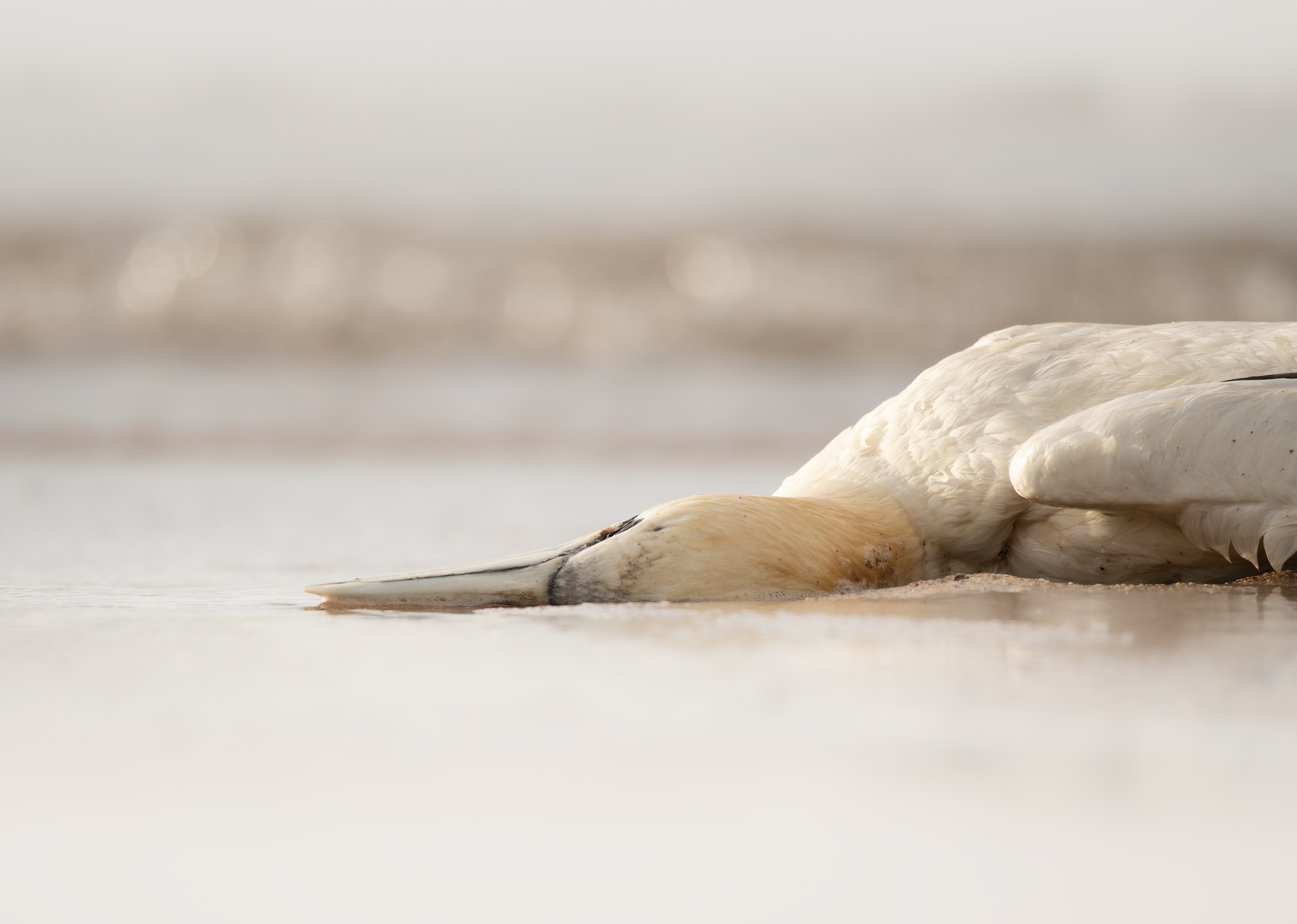
A deceased Northern Gannet lies on the shore beside Bass Rock, formally the world’s largest colony of the species.
Her documentation began at Bass Rock, off Scotland's east coast, one of the world's most important Northern Gannet breeding colonies. Arriving in June as the outbreak took hold, Rachel witnessed a deeply troubling transformation.
Once-thriving nesting areas stood increasingly empty, while dead and dying seabirds appeared along the cliffs and surrounding waters. As the severity of the outbreak became apparent, strict biosecurity measures were introduced and many colonies closed to visitors. Rachel subsequently travelled north to Hermaness National Nature Reserve on Shetland, where the consequences of the outbreak were particularly harrowing.
Rachel’s photographs recorded the scale of mortality among Northern Gannets, with carcasses scattered across nesting ledges, abandoned territories interrupting once-dense colonies and newly hatched chicks surrounded by the remains of infected birds. Her work also documented the wider ecological consequences of the outbreak, including Great Skuas scavenging infected Gannet carcasses, illustrating the vulnerability of interconnected seabird communities to a rapidly spreading disease.
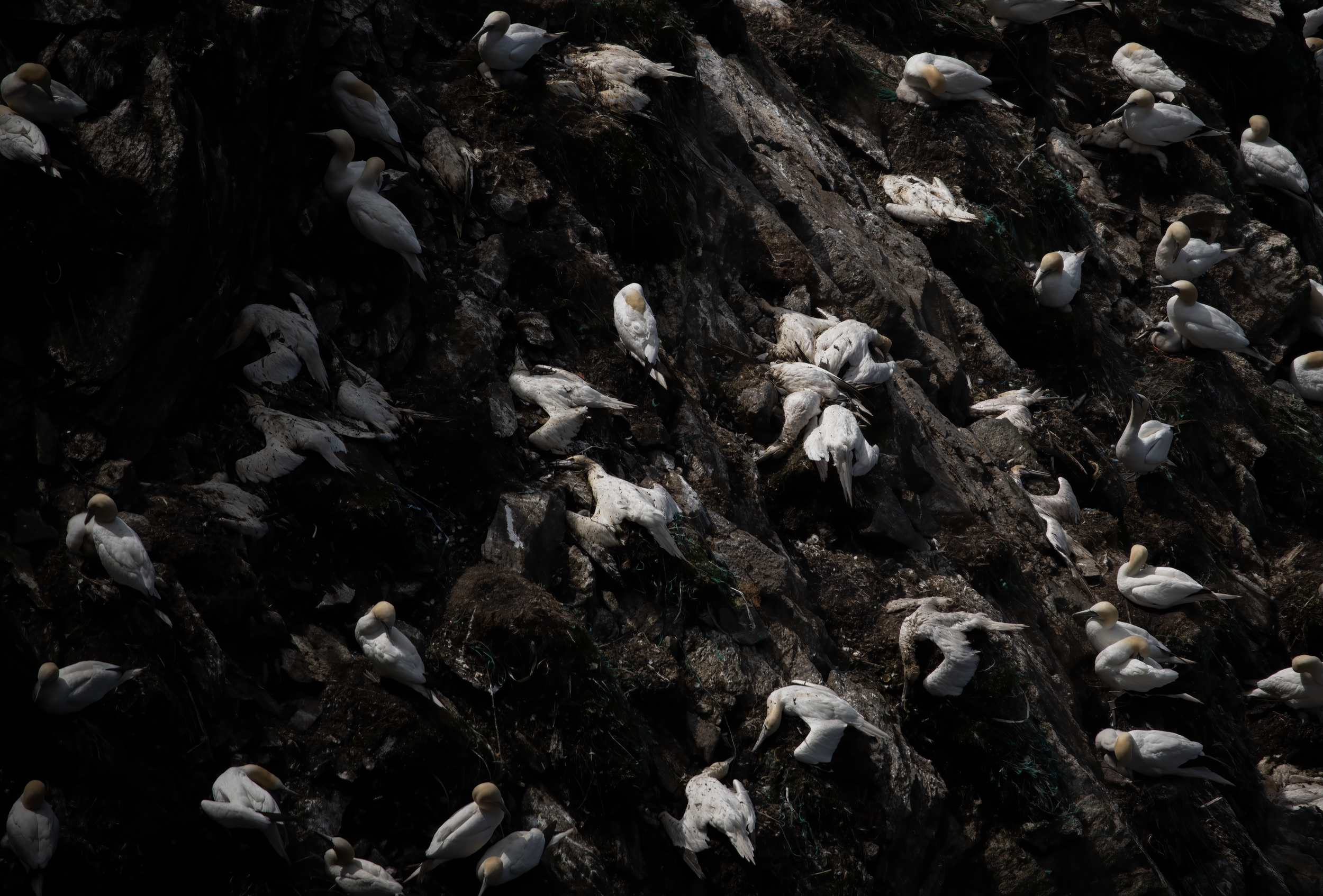
At Hermaness National Nature Reserve, Shetland, thousands of Northern Gannets succumbed to the disease, while lifelong partners and neighbours attempted to continue the breeding season alone.
For Rachel, whose relationship with Northern Gannets extends far beyond photography, documenting their suffering was both professionally important and deeply personal. Having spent years studying, photographing and advocating for these remarkable seabirds, she recognised the importance of creating an honest visual record of a crisis unfolding largely beyond public view. The resulting photographs were published by National Geographic in August 2022, accompanying journalist Helen Scales' investigation. The feature brought international attention to the unprecedented mortality affecting seabird colonies already under considerable pressure from climate change, overfishing, fisheries bycatch and other environmental threats.
In an interview post assignment, Rachel said:
“I have spent much of my life photographing the beauty of Northern Gannets, but I believe I have an equal responsibility to document their suffering. These birds are far more than subjects to me, and my commitment to their future will always extend beyond the photographs I take”.
The statement reflects a principle central to Rachel's career: that wildlife photography carries responsibilities extending well beyond the creation of beautiful images. Her commitment to Northern Gannets is not confined to celebrating their elegance, behaviour or extraordinary marine environments, but encompasses documenting the threats to their survival and advocating for their long-term protection. Through her continued conservation work, Rachel seeks to ensure that the species at the heart of her artistic practice remain at the heart of her advocacy. Her photographs serve not only as records of what has been witnessed, but as opportunities to inform public understanding, encourage meaningful engagement and contribute to a wider conversation about the future of seabirds.
Read the National Geographic feature: In Scotland, a Bird Flu Crisis Threatens Thousands of Seabirds
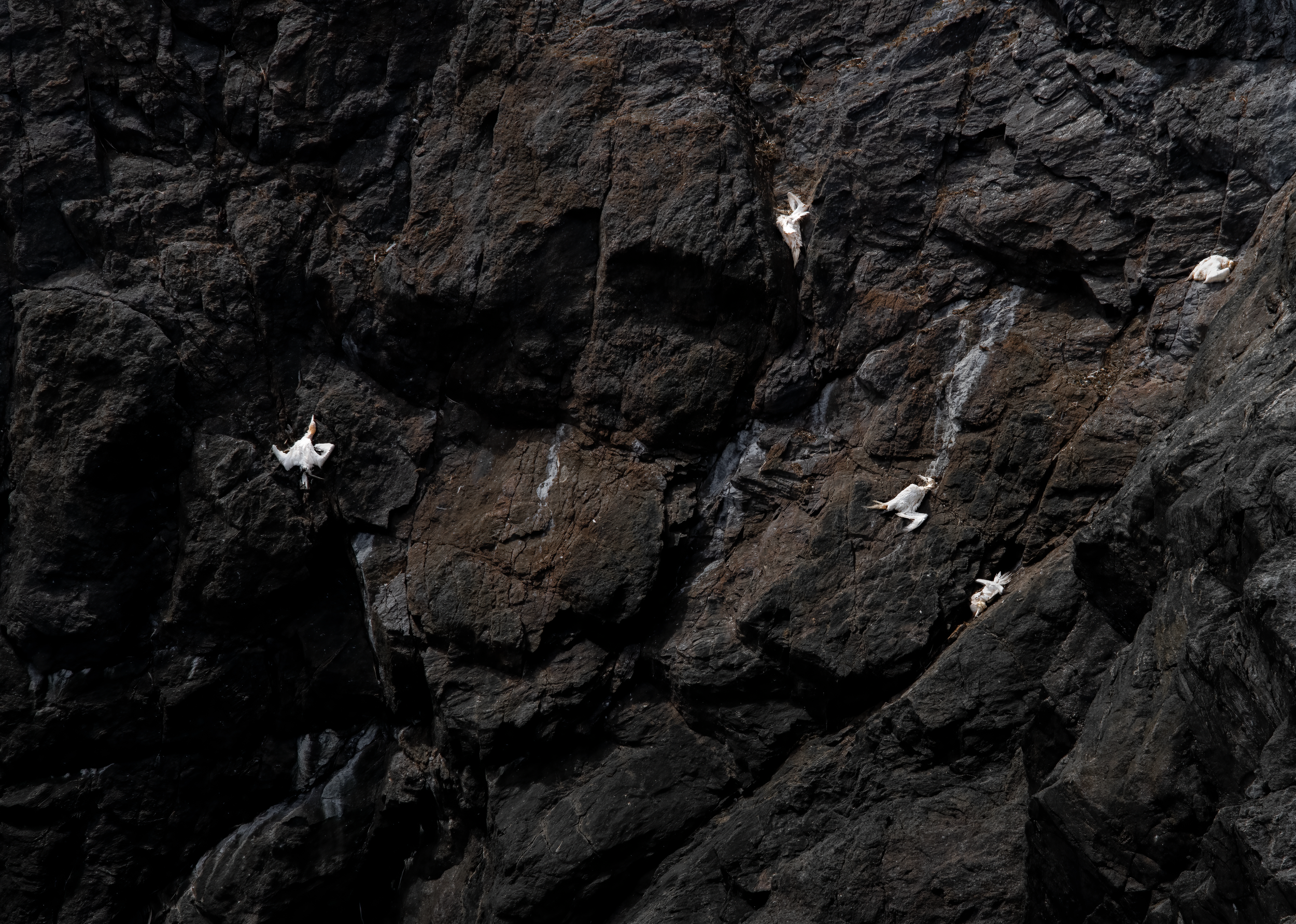
Deceased Northern Gannets hang from the rocks like fallen angels.