


The Gannets of St Kilda & Flannan Islands
Sat 24 Jul
|Oban
In collaboration with Hebridean Adventures

Dates & Location
24 Jul 2027, 15:00 – 03 Aug 2027, 09:00
Oban, Oban, UK
Workshop Information:
St Kilda & the Flannan Islands
A Seabird Photography Expedition of the most remote Outer Hebrides, in collaboration with Hebridean Adventures A bonus opportunity to work with Rachel Bigsby on St Kilda, by sell-out demand.
Late-season Gannets, remote island landings and extended time in one of the North Atlantic’s most compelling UNESCO seabird landscapes, this small-group expedition offers rare access to St Kilda and the Flannan Islands at a pivotal point in the seabird season. Led by Rachel Bigsby in collaboration with Hebridean Adventures, this carefully planned expedition focuses on Gannet chicks, still cloaked in their striking speckled plumage, preparing for their first flight. With extended time and a strong emphasis on observation, this is an opportunity to create work that is considered, not incidental.
Expedition Highlights
Dual island access: St Kilda and the remote Flannan Islands in a single voyage
Extended time on Hirta for immersive, observation-led photography
Late-season gannets, including “guga” chicks in distinctive fledgling plumage
Passing encounters with auks, shearwaters, and fulmars
Small group size for responsive, tailored tuition
Fieldcraft-led approach: behaviour, positioning, and timing
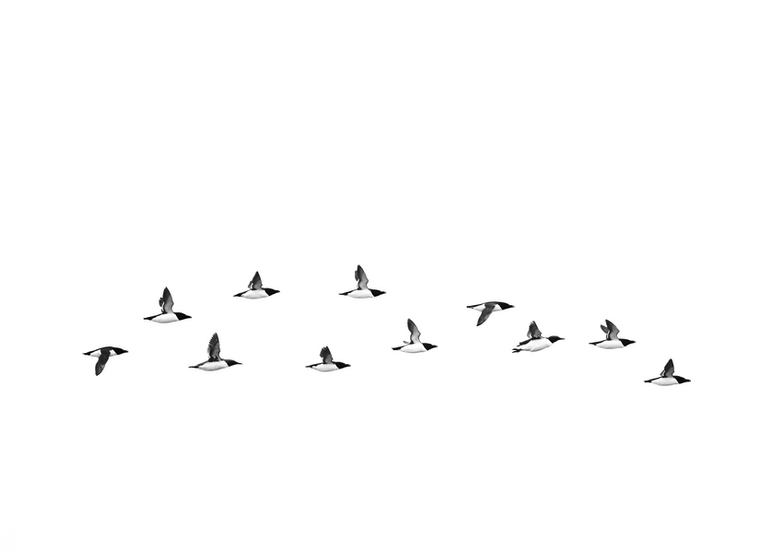
Creative techniques including high key, low key, and in-camera multiple exposures
Strong emphasis on producing finished images in camera
£100 per guest donated to the Scottish Seabird Centre
There is a point in the Gannet season where everything begins to shift.
Guga — Gannet chicks — are cloaked in charcoal-grey plumage, scattered with thousands of white flecks like constellations in a night sky, and stand at the edge of something new. They beat their wings with increasing urgency, testing their strength against the Atlantic wind. Around them, the colony remains in constant motion: adults arriving and departing in tight arcs, the air filled with precision and intent. This expedition is timed for that moment.
Nowhere does that shift feel more pronounced than at UNESCO World Heritage St Kilda. Here, the scale is almost difficult to process. Tens of thousands of Gannets circle the sea stacks in continuous motion, rising, folding, and dropping through the air before striking the ocean at speed. From the water, the cliffs of Boreray, Stac Lee, and Stac an Armin become vertical arenas of movement, where every layer holds something to observe. Rather than moving quickly through it, this expedition is designed to stay with that spectacle. Extended time around Hirta allows for a slower approach, working with shifting light, changing weather, and the rhythm of the seabirds themselves. The aim is not simply to witness scale, but to begin understanding it: how movement patterns repeat, how light defines structure, and how small moments sit within something much larger.
The Flannan Islands then offer a natural counterpoint. Remote and seldom visited, they sit exposed in the Atlantic, carrying a sense of isolation and eerie human history that is as tangible as the wind itself. The Gannet colony here is smaller, but more concentrated, interactions unfold closer, faster, and with a heightened sense of immediacy.
Throughout the voyage, the flexibility of the vessel allows us to position carefully, adjusting for light, wind, and behaviour. Some of the most productive moments come in quieter conditions: early morning calm, or evenings when the light softens and the cliffs begin to hold shape. You will work with Rachel’s distinctive creative techniques including high key and low key imagery, in-camera multiple exposures, and motion-based approaches such as intentional camera movement and shutter drag. Central to her teaching is a commitment to creating images in camera, refining light, composition, and timing in the field, rather than relying on post-production. Tuition is tailored and responsive. Guidance is given in real time from technical decisions such as exposure and autofocus, to the more important process of seeing: recognising behaviour, anticipating movement, and positioning yourself with intent. This is an expedition built around opportunity, but also restraint, encouraging you to slow down, refine your approach, and produce work that feels deliberate rather than incidental.
Places are limited to maintain a focused working environment, ensuring each participant receives meaningful guidance throughout.
👉 For full itinerary details and booking information: https://www.hebrideanadventures.co.uk/cruises/st-kilda-and-the-flannan-islands-with-seabird-photographer-rachel-bigsby/
About Rachel
Rachel Bigsby is a wildlife photographer specialising in seabirds, known for work that balances visual impact with behavioural depth. Her images are shaped as much by observation and fieldcraft as they are by composition and light, an approach developed through years of independent study and time spent volunteering with seabirds in remote coastal environments. She is the winner of the 'Natural Artistry' category in Wildlife Photographer of the Year and Portfolio Winner of Bird Photographer of the Year. Her work has been published by organisations including National Geographic, and she is a Nikon Europe creator and RSPB ambassador. Rachel has photographed extensively across the Antarctic, subantarctic islands, the Falklands, the Arctic, and the British Isles, often working in challenging marine conditions. Alongside her photography, she lectures internationally, with talks hosted by institutions such as the Royal Geographical Society and the Natural History Museum. As an IAATO-certified expedition guide, licensed powerboat operator, and advanced first aid professional, she brings a high level of operational experience to her workshops. This ensures that participants are supported not only creatively, but practically, allowing them to focus fully on their work in the field. Her teaching combines tailored, in-field tuition with an emphasis on observation-led photography, helping participants develop a personal visual style while working with light, movement, behaviour and creative technique in a deliberate and considered way.





For more information about the vessel, click here.
